For those of you who have never eaten with me in person, I like spicy food. One of the things I like about spice is all the different places it can come from. This month, we’re going to be talking about one of my favorite versatile spicy foods, the jalapeño.
As a spice fiend, jalapeños don’t really feel all that spicy to me anymore. Sure, I still get a kick out of them, but when I think of jalapeños, I often think of their citrus overtones and their appetizing crunch.
To illustrate my point, let’s talk about jalapeños in pho! Pho is one of my favorite winter time foods because it combines hot soup with all the vegetables I start craving as winter goes on. But pho without jalapeños lacks the same citrus taste as pho with just lime in it. While lime can give the soup a light citrus taste, it’s the jalapeños the dish depends on to highlight that bright, flavorful note in the soup. Pho doesn’t have to be spicy, and jalapeños that have steeped in the gelatin rich beef broth of the soup are often more mild than outright spicy.
But I do love the spice of jalapeños. So much so, that I’ll even eat them just roasted from the taco truck in Boring. If you want to create your own roasted jalapeños, just hold it over an open flame until the skin blackens. Then seal it in a plastic bag or a tupperware to let it steam for a minute or so, and remove the skin to enjoy the sweetened and spicy flesh of the pepper. This is a great way to soften up a jalapeño to include in any recipe of your choosing, but also a great way to prepare them if you want to appreciate jalapeños on their own.
Another option is stuffing the pepper with cheese and then deep frying it to create a jalapeño popper. I prefer my poppers a little less deep fried and a little more roasted, but the beautiful part of this method is that you can cut the heat of the jalapeño by using thick cheeses like cream cheese to stuff your poppers. Some of my favorite jalapeño poppers come from a sushi place in Portland called Miyamoto. They call them jalapeño ninjas. But if you want to try making your own at home, here’s a handy recipe for you.
Jalapeños aren’t the only versatile thing I’ve been enjoying lately. Two weeks ago, I finally played the first game from Danish Indie studio, Ultra Ultra.
For those of you unfamiliar with the game, here’s the premise:
ECHO’s mechanic is that the Echos will always learn from you. What’s interesting about this is how many times the game forces the player to use that in different ways.
The player has a number of abilities available to them—but depending on the level and the objective, some will be more valuable than others. For example, I never lethally shot an Echo in the light while the Palace was watching. I also avoided crossing water and sprinting when the Palace was watching. However, in some stages, I wasn’t allowed to keep these abilities from the Echos—forcing me as a player to adapt and play the game differently.
But that’s not all.
It turns out the game trailer is lying to you: the Echos don’t want to kill you. They want to acquire the cube on your back. That’s right, the red cube on En’s back is what they’re after—and they’re willing to kill to acquire it.
At a certain point in the game, the player loses the cube. What that means is the player is now working with a Palace full of Echos who learn from them—but that don’t want to kill them.
In that instant, the mechanic that was already so engaging is turned on its head. Suddenly, stealth is no longer an option. Thinning the Echos’ numbers isn’t beneficial. Teaching them to do things for you is easier, and more beneficial. The mechanic is the same, but the goal changes from strategizing to survive the Echos to making them work for you as you encounter them.
Once the player reclaims the cube, however, the Palace has another surprise in store.
Hyper Echos are the “perfect” version of En. They don’t require her to do something in order to be able to do it. They also attack the less advanced Echos in the palace and kill them as if they were En herself.
The mechanic of the Echos learning from En remains the same, but the goal changes once again. Instead of strategizing to create weak enemies or to use the Echos to complete puzzles and help En advance through the Palace, the goal becomes to balance the talents En gifts to the Echos so that she can survive encounters with them, while making them more difficult targets for the Hyper Echos to capture and kill.
Making Echos that are good distractions for the Hyper Echos is exceptionally beneficial to En, because while she may survive an encounter with an Echo that can do everything she can, En will never survive an encounter with a Hyper Echo unless she manages to kill it before it kills her—and, let me tell you, managing that is HARD.
Not only are Hyper Echos twice as tall and twice as fast as En, they kill her in one hit once they catch her. There’s no way to push them over or sneak up on them like with the other Echos either. A Hyper Echo dies after two shots from En’s gun—but killing them like that draws the attention of all the other Echos in the area.
You see now why having Echos that can distract Hyper Echos is so beneficial.
All in all, I was blown out of the water by how many different ways Ultra Ultra managed to challenge me with one simple mechanic. The game was more challenging and more rewarding than any other game I’ve played since Undertale.
If you still need convincing that this is the very next game that should be on your list, don’t take my word for it. Take the word of everyone who’s reviewed it so far:
Once you’re done playing and as in love with this game as I am, go support Ultra Ultra by liking their Facebook page, and Twitter.
(I’m shamelessly plugging them because I want them to make a sequel. Help me out, y’all!)
And maybe enjoy some tasty jalapeños when you need a break from playing. Enjoy!
Aaaaand we’re back after our long break for NaNoWriMo and the holidays!
Today, I’m going to give you my recipe for quick, delicious vegetarian burritos.
Ingredients:
Black beans and rice (two boxes, or four cups)
1 avocado
1 small onion
1 carton cherry tomatoes
1 bag Mexican blend cheese
1 carton sour cream
1 jar of the hot sauce of your choice
1 bag of large flour tortillas
First, put your rice and beans in a pot, then add water. You’ll want to add enough water so that the rice and beans are submerged underneath the water, but not so much that the rice and beans won’t be able to absorb it all. If you have four cups of rice and beans, six cups of water is a good measurement. Put the pot on the stove and cover on medium/high heat. Should the cover begin to jiggle at all during your other preparations, turn the heat down. Check on it every 15 minutes until the water is mostly absorbed by the rice and beans. Then turn off the heat and leave covered until finished preparing the other ingredients.
While the rice and beans are cooking, all you need to do is cut up the avocado, onion, and tomatoes into pieces sized to your liking. I like to split my avocado in half, then slice it and then cut it in half again—but I like BIG pieces of avocado. I dice my onions. I split cherry tomatoes in half.
Once all of the ingredients are ready, lay out one tortilla on a plate. Begin with a base of rice and beans, then add avocado, onion, tomatoes, cheese, sour cream, and hot sauce to taste.
Lately, I’ve been using a hot sauce that I picked up at my local Japanese market. It’s a spicy blend of red chilis that’s a little less fluid than sriracha and reminds me a lot of the red salsa you get at taco trucks sometimes.
Once you’ve stuffed everything onto your tortilla, it’s time to close it. This can be the hardest part, so I’m going to share my tips with you. The top and bottom of the tortilla are perpendicular to the lines you’ve drawn with your hot sauce and sour cream. This will ensure that those condiments run throughout your burrito, rather than accumulating in one circular bite within it. Take the top and bottom of the tortilla, and fold them over the contents of your burrito by half an inch to an inch. Then, while holding the top and bottom of the tortilla over the filling, begin to roll one side of your tortilla. You’ll want to take the side you’re rolling all the way across the burrito, and make sure that it closes OVER the fillings that are trying to escape. Finish rolling, and the burrito will sit beautifully on your plate with each end tucked in!
If you’re worried about ingredients being cold, chuck it in the microwave for 45 seconds to a minute. And presto!
What I like about these burritos is that they’re delicious, filling, and good for you (assuming you use all the veggies).
You could even say they’re well rounded—much like the series of games I want to talk to you about today: the Ace Attorney series.
Some of you may know this series, since it’s actually kind of old! Defense lawyer Phoenix Wright is the main character. In a corrupt and legally questionable court system, he has the burden of proof placed upon him to prove his clients innocent of the crimes they’re accused of. This would be a lot easier if his rival, prosecutor Miles Edgeworth, wasn’t so focused on getting them proved guilty!
The series is one of puzzle games, where the player must both investigate crime scenes to find evidence, and then use that evidence in court to defend their client. While in real life a lawyer needs to know how they’ll present their case before going into court, Phoenix almost never knows how the clues he’s found fit together until he’s in the courtroom. A large mechanic of the game is breaking down witness testimony and using the evidence you have on hand to either discredit them or cast suspicion on them.
As you can imagine, the “seat of your pants” energy of the game leads to more than a few humorous moments.
As do the naming conventions of the game.
While we all remember the painfully unnecessary adaptation changes made to early ‘90s anime, the Ace Attorney series manages to change every single name in the game, and yet remain true to the heart of the series.
You see, in Japanese, each character in the Ace Attorney series has a name that also acts as a pun. Phoenix himself is named Ryuuichi Naruhodo. His last name “Naruhodo” means a few different things in Japanese depending on the context, but is mostly used as an expression to mean, “I see,” “that’s right!,” and “indeed.” His first name “Ryuuichi” also uses a kanji that references a mythical creature—the dragon. Calling him Dragon Wright in English wouldn’t have made much sense, so the substitution was made for a different mythical creature—one who often comes back from death’s door again and again the way our dear main character does when he doesn’t know what to do in court: a phoenix. And so, Phoenix Wright became the name of Ryuuichi Naruhodo in English.
A similar process was applied to all the other characters, allowing them to keep the spirit of the jokes of each of their names, while making them accessible to English players.
I’ve seen a lot of bad adaptations in my years, but this is one that I feel was able to do more good than harm with its changes. The change even helped to preserve an element of the game that English players wouldn’t have caught otherwise!
It’s like a burrito. All parts preserved as singular, but rolled up together to make a wonderful harmony of flavor.
My garden did two things really well this year: zucchini and a miracle pumpkin that came from the seeds of a store bought pumpkin I made soup out of last year. But what do you do when you have more squash than you know what to do with?
You make zucchini bread muffins and real pumpkin pie straight from a roasted pumpkin, that’s what!
Zucchini Bread Ingredients:
1 ½ cups all-purpose flour
¾ cup sugar
1 teaspoon baking soda
1 teaspoon ground cinnamon
½ teaspoon salt
1 large egg, lightly beaten
½ cup canola or vegetable oil
¼ cup milk
1 tablespoon lemon juice
1 teaspoon vanilla extract
1 cup shredded zucchini
¼ cup miniature semisweet chocolate chips
¼ cup chopped walnuts
First, preheat your oven to 350°F so it’ll be ready to bake your muffins. Then combine the flour, sugar, baking soda, cinnamon, and salt in a bowl. In a separate, larger bowl, beat the egg, oil, milk, lemon juice, and vanilla together. Then stir in the dry ingredients until the entire mixture is moistened. After that, it’s time to fold in the zucchini, chocolate chips, and walnuts. At this point, you’ll want to either grease a muffin tin or throw some muffin cups into your muffin tin. Then fill each muffin mold two-thirds of the way full. DON’T completely fill them or your muffins will be difficult to get out of the tin, and will be monstrously big. Bake for 20-25 minutes or until a toothpick comes out clean.
These muffins freeze pretty well too, if you want to make a large batch and then save some for the winter. This recipe will give you about a dozen muffins, so plan accordingly. I made tons this summer to keep up with the way my zucchini plant was producing.
Pumpkin Pie Crust Ingredients:
1 ⅓ cups all-purpose flour
½ teaspoon salt
½ cup butter
3 ½ tablespoons cold water
Pumpkin Pie Filling Ingredients:
2 cups mashed, cooked pumpkin
1 (12 fluid ounce) can evaporated milk
2 eggs, beaten
¾ cup packed brown sugar
½ teaspoon ground cinnamon
½ teaspoon ground ginger
½ teaspoon ground nutmeg
½ teaspoon salt
First off, if you don’t want to make pie crust or roast your own pumpkin, store bought is fine. If you are roasting your own pumpkin, make sure to cut it in half, take out the seeds, scrape the sides with a spoon, and roast it at 400 degrees for 20-40 minutes. Placing the cut sides down on a cookie sheet is an effective way to do this. Once you can spear the pumpkin flesh easily with a fork, it’s done. Remove from the oven, and mash. If you end up with more than 2 cups of pumpkin, double your recipe and make two pies!
To make the crust, mix together the flour and salt. Cut your butter into the flour, and then add cold water one tablespoon at a time. You may need only 3 tablespoons, or up to 4 tablespoons, so pay attention to the consistency of your dough when mixing. Mix the dough after each tablespoon of water and repeat until dough is moist enough to hold together. With lightly floured hands, shape the dough into a ball. On a lightly floured cutting board, roll the dough out to about ⅛ inch thickness. With a sharp knife, cut the dough 1 ½ inch larger than the upside-down 8- to 9-inch pie pan. Gently roll the dough around the rolling pin and transfer it right-side up onto the pie pan. From there, unroll it and ease the dough into the bottom of the pie pan.
Once your pumpkin is done roasting, take it out of the oven and let it cool. Then peel off the skin and mash it! If you want a smoother consistency, you can also puree your pumpkin. I just really like getting my hands dirty mashing the pumpkin, and feel the mashed pumpkin consistency of the pie holds together better, but both methods will taste delicious! After you’ve prepared your pumpkin and put it in a large bowl, add your evaporated milk, eggs, brown sugar, cinnamon, ginger, nutmeg, and salt to the bowl and mix. You can do this with a spoon or with an electric mixer or immersion blender. Regardless of your method, be sure to mix the pie filling well. Then pour the filling into your prepared crust and bake for forty minutes or until when a knife is inserted one inch from the edge comes out clean.
Now that we’ve squashed all that squash away into those baked goods, we’re going to talk about a game that was squashed into the shadow of its predecessors—Mass Effect: Andromeda!
Let’s take a moment also to appreciate how well BioWare did on making the cover for Andromeda a whole lot less gendered than their previous covers. It still bothers me that I have to look at male Shepard’s ugly mug every time I pull up a track from one of the Mass Effect trilogy soundtracks. Star reflecting helmet and practical genderless spacesuit/armor, however, I’m all about.
When Andromeda was first released I lovingly referred to it as Andurrmadurr because it was so buggy that it was nearly unplayable. I put it down for a few months and came back after a hefty amount of patching had been done, and loved every minute of it.
What’s unfortunate about Andromeda is that since it follows the monumental Mass Effect trilogy, it had a lot to live up to—and has been catching a lot of hate from disappointed fans of the previous trilogy and fans who wanted a less buggy game in the beginning. My hope today is to convince you that Andromeda deserves a second chance—because it’s chock full of really important, interesting things for the intersectional and feminist gamer.
If you’ve never heard of Mass Effect before, google it or get the run-down on it from my previous blog post that went up earlier this year.
Now that you understand that Mass Effect is a sci-fi title set in space where multiple alien species coexist and collaborate, imagine they decided to take a little jaunt over to the next galaxy. A one-way trip that takes 600 years in a cryo-stasis pod with the hope of establishing a new home. When Ryder wakes up in Andromeda, it’s to the reality that the previous intel on livable planets in the Andromeda galaxy has become a little outdated. One mission later, she’s replacing her father as the human Pathfinder and tasked with finding a way to make a home for herself, humanity, and all the other people who came to Andromeda with the dream of a new life.
We’ll be using female pronouns for the player character in this blog post, as Sara Ryder is the twin I’ve picked both times I’ve played through Andromeda, and she’s the one I know best. Her twin Scott Ryder will also be mentioned, as whichever twin the player doesn’t pick also plays a role in the story. The reason? Andromeda is a family story. While Shepard’s story in the Mass Effect trilogy was more of an epic, Ryder’s story is one of discovery and new life.
The theme of family doesn’t stop with Ryder, however. Many of Ryder’s team mates are also very attached to their families. Drack, the old krogan warrior, is a grandfather. His granddaughter Kesh serves on the Nexus as Superintendent. Vetra, your turian artillery and trade specialist, is a big sister. Peebee is an asari misfit who finds a place on the team. Drack’s granddaughter Kesh, Vetra’s sister Sid, and Peebee’s ex-lover that left her with attachment issues all feature heavily in these team members’ loyalty missions—which really brings out the theme of family and how familial connections define us. In tone, this gives Andromeda a focus on nurture and creation that Mass Effect has never had before.
Drack
Vetra
Peebee
These themes and ideas are furthered by the profile of the new alien species the player encounters in Andromeda—the angara. The angara are a hugely emotional species—but in a very different way than has been previously portrayed. Often, emotion is seen as the opposite of logic and is therefore discounted as worthless. It’s also been coded as “female” in our own culture for a very long time, which has a whole other set of associations that I won’t bother to get into, but you get the idea. It’s a big deal to see emotion highlighted as an intelligent and valuable thing. Plus, the angaran team member to join Ryder—named Jaal, for those of you wondering—is male. This means that we have a male character exhibiting high levels of emotion in healthy ways within the game, which is another great stride for the Mass Effect franchise.
On top of that, we finally have female krogan, salarians, and turians popping up as normal NPCs everywhere in the game—giving the galaxy a more realistic population than the earlier games. Female angara are common as well. As are women in power, from the sleazy human crime lord Sloane Kelly to the powerful and rigid krogan leader Nakmor Morda to the asari and salarian pathfinders. Conversations about diverse family groups, correct pronouns, and same-sex relationships aren’t uncommon either. Andromeda is also the first videogame EVER to feature a sex scene with cunnilingus in it! If that’s not a feminist victory in itself, I don’t know what is—and that scene is part of Jaal’s romance, since I know some of you are wondering. ;)
Although Mass Effect: Andromeda had a rough start—read all about the drama that went down at BioWare here—the game has been patched, and the story and characters were handled with so much love and compassion that you won’t regret squashing Andromeda into your media queue. Especially if you have a side of zucchini bread muffins or pumpkin pie to refuel on between skirmishes.
Yakiniku with onions and ribeye has been one of my favorite Japanese style dishes since I was introduced to Japanese cuisine. It’s expensive, so it’s one of those things I only indulge in when I really want a treat—and I recently learned to make it at home.
Ingredients:
½ lb beef ribeye (or you can substitute a different cheaper cut in a pinch)
2 tbs unsalted butter
½ large yellow onion, thinly sliced
1 tbs cooking sake
⅔ cup white wine
1¼ cups water
3 tbs soy sauce
½ teaspoon ginger juice (grate ginger root and then squeeze the pulp to get this)
2 tbs sugar
¼ tsp very finely minced garlic
½ tsp salt
2 cups hot cooked rice
Optional Ingredients:
2 tbs beni shoga (pickled ginger) for serving garnish
2 large eggs to break over your yakiniku beef bowls just before serving
Serves two, so double the recipe if you’ve got four people in your family like I do.
Before you do anything, you’ll want to freeze your beef for an hour. This will make the beef rigid enough to cut into thin slices. Slice the beef very thinly, almost shaving it. In a saucepan over medium heat, melt your butter. Once melted, add your onions and cook until translucent, about four to five minutes.
You may also want to start steaming your rice now, if you haven’t prepared it already. Each cup of rice will become two cups once it hydrates, so one cup of rice will be enough to make the two you need. If you’ve got a rice cooker, you won’t have to pay much attention to this, but if you’re working with a pot like I am, here’s a great way to make sticky rice. If that’s too much work, just cook it normally in a pot and keep the lid on. Once the lid starts to jiggle a little, reduce the heat and let it simmer for about fifteen minutes until the rice is completely cooked through. After that, remove the rice from heat and let sit for another fifteen minutes without removing the lid. Washing and soaking your rice can also make a difference in how sticky your rice turns out, so consider letting it soak overnight or washing it vigorously before cooking it.
Once your onions are done to your satisfaction, add your white wine and cooking sake and let it cook for another two minutes. Next, add the water, soy sauce, ginger juice, sugar, garlic, and salt to the pan and mix well. I find it easier to do if I combine those ingredients in a measuring cup prior to adding them to the saucepan, as it makes it easier to dissolve the sugar in the other liquids and disperse it more evenly throughout the seasoning.
Next add the beef. Stir the mixture constantly to keep pieces of meat from sticking together and keep on heat until the meat is just cooked through. That should take about two to three minutes total.
Divide your rice between the bowls you’ll be serving the yakiniku in, then spoon the beef and onion mixture over the rice. If you feel like it, provide an egg for each person to crack onto their meal and mix with their beef. A garnish of Japanese pickled ginger called beni shoga will add a splash of color and a tasty side treat to the dish as well.
Hopefully you know what kind of media tie-in I’m about to make the leap to. But don’t worry, it’s not what you think. I’m not going to list off all the problems I have with dating sims. Instead, I’m going to talk about the beefiest dating sim of the year: Dream Daddy!
Dream Daddy is a dating sim produced by Youtube famous group The Game Grumps, and is a dating sim where you create a dad and then go forth to date other dads. Although there are definitely some really good dating sims out there in the world, this is the only dating sim that I know of that focuses less on the fan-service and more on the realistic portrayal of people.
Before even entering the game, the player is asked to choose a body type for their character. The game is body positive, offering players three different diverse body types. The game is also inclusive of trans men, mirroring the three available body types, but wearing binders.
After creating your Dadsona and jumping into the game, your first interaction is with your daughter, Amanda. Through your conversation with her, you establish your character’s backstory. Was their previous partner a man or a woman? Was your daughter Amanda adopted or born to you and your partner? The freedom allowed to the player with these dialogue options is momentous for a dating sim.
But the good feelings don’t stop there. In the game, there are six different dads to date. You can date every dad a total of twice before choosing to get serious about one of them—so the game doesn’t ask you to pick a favorite without getting to know them—but what’s exciting about each dad’s storyline is discovering how they go against the stereotypes you assume about them.
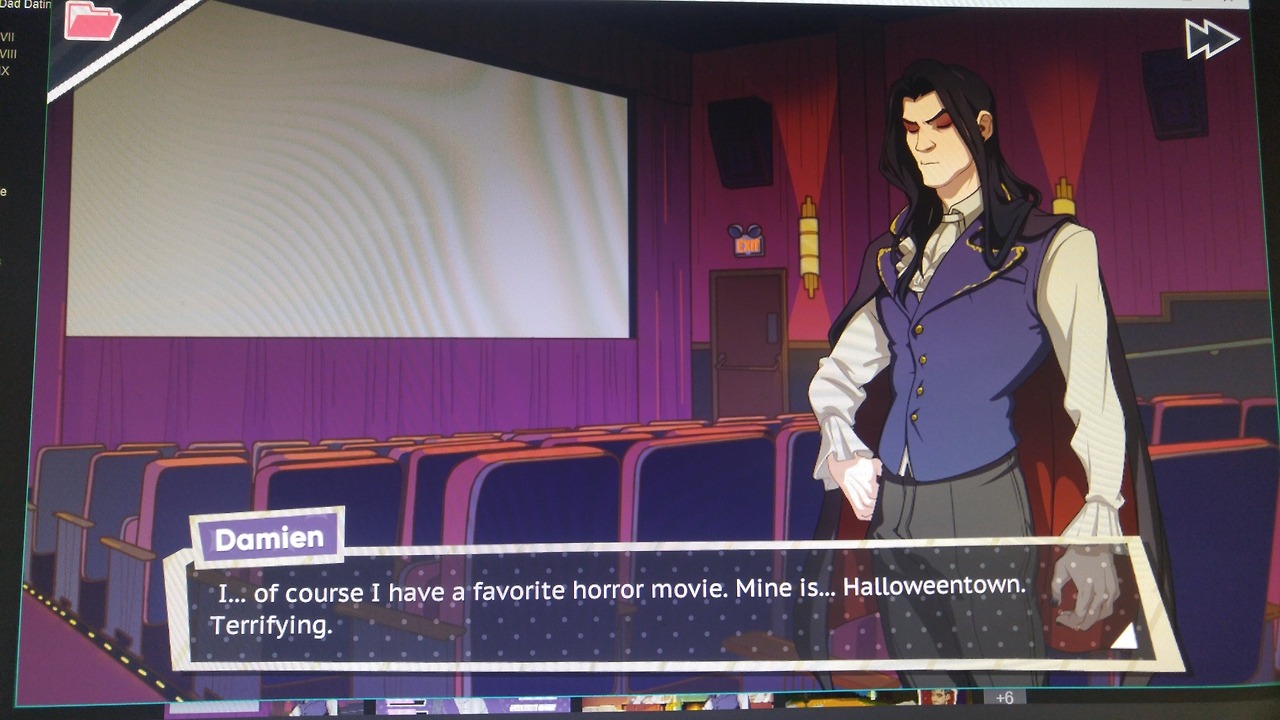
For example, let’s take Damien.
Damien is marketed as the goth, Victorian obsessed dad of the game. The achievements you get for going on dates with him are called Interview with a Vampire 1, 2, and 3. But Damien isn’t all that he seems. He’s a man who cares a lot about his clothes and about being able to do the things he likes, but he’s also afraid of horror movies.
He enjoys the gothic pastime of strolling through graveyards because he feels it allows him to celebrate life.
And, if you compliment his clothes on your first date with him, he’ll talk about how important it is to him to be able to pick from a closet of period specific clothing—including binders.
Trans characters are often overlooked in media, so this tidbit of information that confirms Damien as trans while also not making a big deal out of it is a huge victory for the dating sim genre, which is often written off as shallow and there only to provide fan-service.
Damien isn’t the only character in the game doing his part for representation.
Craig, Hugo, and Mat make the cast ethnically diverse, making room for Asian-American, Latinx-American, and Black-American representation.
Mat represents how a person who likes people but has social anxiety acts in social settings.
Hugo represents the intellectuals who also enjoy “base” things like wrestling.
Brian represents how always trying to please someone else can backfire and make them think you’re competing with them instead—leading to an entire debacle over both people thinking the other one hates them. He also is an example of an overweight and active character—counteracting the stereotype that being overweight is a result of laziness rather than genetic disposition.
Joseph represents tolerant religious practice and how to be a cool youth pastor.
But it goes even further than that.
Craig, the dad who seems to be successful at everything he touches, is actually representing what high functioning anxiety looks like.
And Robert, the seemingly unfazeable bad boy of the dad group has some self-destructive tendencies that he doesn’t want to admit to himself. This realization is very difficult to get to, however, as if the player sleeps with Robert either of the times Robert tries to avoid the subject, he will discard the player as someone who is only interested in him superficially and can’t be trusted.
It’s worth noting that all of the dads have different familial make ups as well. Some have lost their past spouses like Dadsona has. Others have separated from their partners amicably. Others never had a partner to begin with, and still others may still be involved with their crumbling marriages.
What I’m trying to say, is this is a wonderful story in which you act as a real father figure to your remarkable photography major of a daughter, and also meet some other remarkable fathers along the way. Go play Dream Daddy and let it wash away your beefs with dating sims.
When I was little, my family and I lived next door to an old woman named Elvina who became something of a surrogate grandmother to me. Elvina made the best pickles. The BEST pickles. They were full of flavor and spicy. I loved them. They had character. I would pick flowers from my mother’s garden and take them over to Elvina’s house, hoping to gain entry and share some pickles with her.
A few years back, Elvina passed away. I talked about how much sharing pickles with her had meant to me at her funeral. Her daughter-in-law and her son remembered what I said when it came time for them to move from the house they had shared with Elvina, and told me to take as many jars of Elvina’s pickles from their cellar as I could carry. I took over 75 jars of pickles—and I’ve just run out.
So. This month, we’re going to talk about how to make vinegar-less, flavorful, spicy salt pickles just like Elvina used to make!
Pickling Brine Ingredients:
2 tablespoons kosher salt for every quart of water
Ingredients for Each Quart Jar of Pickles:
Pickling cucumbers, scrubbed
1 quart pickling brine
1 tablespoon pickling spice
4-5 peeled and gently crushed cloves of garlic
2-4 Thai chilies, split down the middle with the seeds left intact
2-3 fronds of dill weed (fresh or dried)
2-3 grape leaves
Before we begin pickling, there are some things we should go over. If you’re not sure if you have the equipment for canning, check it out here. If you’re new to canning and are worried about messing it up, here’s the rundown.
Now you’ve got all that, let’s talk cucumbers. 1½ to 2 pounds fresh is equal to 1 quart canned pickles, assuming your pickles have an average length of about 4 inches. A bushel of pickling cucumbers is 48 pounds of cucumbers, and comes out to 16-24 quarts of pickles, depending on how closely they’re packed. If this is your first time making the pickles and you don’t want too many or too few, a half bushel or 24 pounds of pickling cucumbers should get you about 10-12 jars of pickles.
Now that you’ve got your equipment and decided on how many jars of pickles you’re going to make, it’s time to make our brine and scrub our pickling cucumbers. This is also a good time to sterilize your quart jars.
Make the brine by dissolving your salt in the amount of water you’ll need. Remember you’ll need two tablespoons of salt for every quart of water you need, and one quart of brine for each jar—which means you should have a quart of water for every quart of pickles you intend to make. You can heat the water to help the salt dissolve, but it shouldn’t be necessary to boil it for a long period. Be careful of boiling off your water if you choose to heat your brine.
If you’ve never scrubbed a cucumber before, you might find the experience quite cumbersome. The important part is to make sure that all of the bristles have been removed from the skin of the cucumber. It’s important to get rid of the blossom at the end of the cucumber, and if you want your cucumbers to be particularly crunchy with no softness, make sure to trim off at least 1/16 inch of the blossom end. If you’re confused about which end is the blossom end, it’s the one that DOESN’T have the stem. If you aren’t sure which end that is, cut them both off. Trimming will allow the brine to infiltrate the cucumber more quickly as well, so even though you might feel like you’re losing valuable pickle real estate, you’ll be ensuring that the enzymes released by the blossom end don’t soften your cucumber and that the pickle will have a delicious, consistent flavor.
If you haven’t made your pickling spice yet, throw your ingredients into a bowl and mix. You can pass on the red pepper flakes if you’re going to use more Thai chilies, or keep them if you want extra heat.
Once you’ve made your brine and pickling spice, and scrubbed and trimmed your cucumbers, you’re ready to assemble your jars! First, lay a grape leaf at the bottom of your sterile quart jar. Throw a half tablespoon of your pickling spice into the bottom of the jar, along with two to three of your garlic cloves. One of your chilies can go down here as well. Then start packing your cucumbers into the jar. It will be easiest if you put the largest cucumbers in first, as smaller cucumbers can fit between them more easily. Be careful not to break or bruise your cucumbers during this process. Let one of your other Thai chilies get lost somewhere in the middle of this packing process, and be sure to leave yourself space at the top of the jar. Once the pickles are packed, throw the other half tablespoon of pickling spice and the rest of your Thai chilies and garlic in. Fill the jar with brine, and ball up your final grape leaf to keep the cucumbers submerged in the brine. If one grape leaf isn’t enough to keep the pickles submerged, use another. Sometimes there would be two or three grape leaves at the top of Elvina’s jars, so don’t be wary about using too many.
If you’re allergic to grape leaves or don’t like them for some reason, though, you can use other leaves so long as they have tannins in them. Here’s a list of good ones and an explanation about why they work as part of the pickling process.
Once all of that is in your jar, wipe the rim, apply your sterilized seals, and tighten the canning rings. There seem to be a lot of different opinions about how tightly you should tighten these rings, so I’m going to suggest heading somewhere in the middle. Elvina’s jar rings were usually rusty and difficult to open, but I don’t think that’s because she used her old lady super strength to tighten them to the extreme. One blog suggests tightening only as much as you can with your fingertips and no more. That seems like a good rule to me.
Once done, store somewhere between 60 and 85 degrees. If you notice the lids of your jars bulging, burp your jars by unscrewing the ring a little, then retightening. Everyone has different opinions about when pickles are done fermenting and ready for consumption or cold storage, but here’s a nifty guide about how you can monitor your pickles. It seems at least six weeks will be necessary with salt pickles, but if you notice bubbling in your brine and a sour yet pleasing smell from the jars, you’re probably in the clear.
It’s not just pickles that can benefit from their own company, though. Self reflection is something human beings benefit a lot from as well, especially when recovering from trauma. It’s not often that characters are given the opportunity to recover from trauma in narrative, though. Either the plot works its magic and they’re magically recovered or a character is deemed too damaged and they either sacrifice themselves or are killed off in the events that follow. That’s why it was so exciting to have every character of the main cast of the Persona 5 video game realistically work through and recover from their trauma.
I had high hopes for Persona 5 when it was announced. I dreamed of a female protagonist option, same-sex romance storylines, and more realistic and character-true writing for the heterosexual romances. While Persona 5 didn’t give me these things, it did give me a gritty story riddled with abuse and realistic recovery—even if the methods that put an end to the abuse were the stuff of fantasy.
Persona 5 centers around Akira Kurusu. As a minor wrongfully convicted of an assault charge, he is placed on probation and sent away to a new school. There he meets Ryuji Sakamoto, a previous member of the track team who quit running when his coach broke his leg, and Ann Takamaki, a girl who is going on dates with said coach to protect her best friend’s starting position on the school volleyball team. All of them have been wronged, all of them are in trouble, but none of them know what to do or how to resist. Then, a mysterious app on Akira’s phone transports Akira and Ryuji to a distorted version of the troublesome coach’s reality called the Metaverse where their coach’s Shadow rules over a Palace like a king. Ryuji and Akira encounter a cat-like entity named Morgana within the Palace. When Morgana tells Akira and Ryuji they can force the coach to confess his crimes by stealing the treasure of the Palace, the team finds a way to resist.
In the average storyline, Ann and Ryuji’s traumas would be fixed as soon as their abuser was out of the picture. Persona 5’s true strength comes through when both Ann and Ryuji are still dealing with the effects of their coach’s behavior even after he’s confessed to his crimes and been imprisoned.
Some other members of the cast, like Yusuke Kitagawa and Makoto Niijima, refuse to acknowledge they’re being abused at all when Akira and company bring it to their attention, until they reach their own personal breaking points. Yusuke resists after the Shadow of his abuser owns up to the crimes Akira and company suspect him of. Makoto takes longer, as several people in her life are taking advantage of her. It’s not until her conflict with each comes to a head that she stops doing what she’s told, stops enduring the abuse, and resists.
The cast also includes characters that know they’re being abused, but put up with it for the love of their abuser, like Haru Okumura, who hopes once her father is brought to his senses by the Phantom Thieves he’ll return to being the caring parent and compassionate business owner she remembers from her younger days.
But the real coup de grâce is the party member that is punishing herself, Futaba Sakura. Futaba is the only party member who has her own Palace. Akira’s team—fittingly called the Phantom Thieves given the nature of the work they do in Palaces—infiltrates Futaba’s Palace to help her work through her troubled past and distorted memories concerning the death of her mother.
Futaba is a person who rarely ever leaves her room and absolutely never leaves her house. The Japanese term for a person like Futaba is a “shut in,” and they are hugely stigmatized in Japanese culture. The inclusion of Futaba in the game and the attention paid to her as a party member who gets to recover from her shut in status is something that’s rare in Japanese media. The portrayal of Futaba not as a victim but rather an active participant in her own recovery is even more colossal.
As you can see in the video, Futaba faces herself before her Persona awakens. Each Persona user is forced to do that, but since Futaba also plays the part of her own abuser, she is also rebelling against herself and the tomb of guilt she built to keep herself prisoner. Any kind of change requires self reflection. Any kind of healing from trauma like this requires even more so. Most of the struggles portrayed in Persona 5 are fantastical when it comes to how the party member rebels against their abuser. Futaba’s is much more metaphorical. While the method is still fantastical, the core of the situation is realistic: Futaba faces herself, overcomes the limitations she’s inflicted on herself, and changes her world view. Her recovery comes about not because the Phantom Thieves stole her heart, or because the monster she created in her distorted reality was beaten, but because she looked at herself and said “no more.”
Of course, that was just the beginning of Futaba’s recovery. Each recovery begins with the step of deciding one wants to recover—and it’s pickling with our thoughts that helps us get there. Of course, fermentation can be a tricky business. Left to our own devices, we are capable of becoming delicious pickles, or sour, rotten versions of ourselves carrying botulism. That’s why we go about it like they do in Persona 5; with a couple good friends who know what we’re going through and who don’t let us forget our good parts, one of whom might be the main character and our personal, unpaid therapist.
New Year’s is one of my favorite times of year. My junior year of college, the women I lived with and I started getting together to exchange our holiday gifts on New Year’s. We would play Christmas music, and make latkes together. Perhaps you’re Jewish and know exactly what I’m talking about when I say “latkes.” Perhaps you’re a food aficionado and also know what I’m talking about. For those of you who have never heard of a latke in your life, I highly encourage you to find one and eat it immediately! The latke is a Jewish traditional potato pancake. They are a favorite Hanukkah food due to their being fried in oil. As we all know, the miracle celebrated at Hanukkah is oil that should have only lasted one long winter’s night burning for eight!
Now the connection between latkes and miracles is clear, there are many ways to make latkes, and many things they can be topped and eaten with in accordance to the eater’s preferences. Latkes can be made from russet potatoes, assorted vegetables, sweet potatoes, and even cheese. The most common toppings for latkes are nothing (as latkes are very tasty just on their own), sour cream, and applesauce. My friends and I prefer to make our latkes out of a combination of shredded russet potatoes, parsnips, and sweet onion. We like to have both sour cream and applesauce on hand to spread on our latkes. I’ll chronicle our recipe below. I’ll leave it to you to choose your toppings—maybe even try out some new ones of your own. If you’re interested in alternative recipes or more latke trivia, you’ll enjoy directing your attention here to the blog of Tori Avey.
Ingredients:
3 large russet potatoes
1 large parsnip
1 medium sweet or white onion (dealer’s choice)
4 large eggs
4 tablespoons of flour
3 teaspoons of salt
Freshly ground black pepper to taste
Oil for frying (we prefer olive oil)
First, you will need to peel and grate your potatoes and parsnip. You will be frying your potatoes, but if for some reason you don’t wish them to discolor prior to frying, you can put your grated potatoes in water. You can grate the vegetables straight into a bowl of water to do this quickly. Next, you will finely chop your onion. Once the potatoes, parsnip, and onion are prepared, you will need to squeeze as much water from the mixture as you can. You can do this by pressing out the water with cheesecloth or tea towels. The removal of moisture is one of the reasons my friends and I like to add parsnips to our latke mix, as parsnips don’t retain as much water as potatoes and onions. It’s important to get all of the excess moisture out of the vegetables so that they will fry agreeably.
Once you’re satisfied with the dryness of your grated vegetables, crack your eggs into a separate container and beat them lightly. Pour them over your vegetables and mix when done. Then add the flour, salt, and pepper and mix well.
Next, you will prepare your oil. It’s important to get the oil to the right temperature. If the temperature is too low, your latkes will be soggy. If it’s too high, they’ll burn on the outside before they’ve cooked all the way through on the inside. If you’re worried about the temperature of your oil, place an unpopped popcorn kernel in it. When the kernel pops, the oil is ready for frying.
Once your oil is ready, it’s time to form your latke mix into pancakes. My friends and I do this by hand, measuring the amount for each latke with the palms of our hands. Latkes are usually small, perfect for sharing and eating with one’s hands. Although larger latkes can be made, they often break apart in the frying pan. Experiment with the size, and see what works for you. Depending on the size of your pan (and your latkes), you’ll be able to fry varying numbers of latkes at a time. I have yet to encounter a pan large enough to allow me to fry all of my latkes at once, so it’s important to set up a drying area for your latkes. A drying rack with a paper towel works nicely—however, if you have many latkes to fry and want to serve them hot and all at once, my friends and I have found that turning our oven to warm and placing newly completed latkes onto a paper towel covered cookie sheet works rather well. The heat of the oven keeps the latkes crispy without letting them get soggy or cold.
Enjoy your finished latkes with your choice or lack of condiment. Just like in everything Bioware has ever created, the choice is yours.
Which brings us to this month’s media tie in. We’ll be talking about choice in video games. We’ll cover the Mass Effect trilogy (both because of hype for Mass Effect: Andromeda and because I just beat them this last December), The Legend of Zelda: Skyward Sword, and Chrono Cross.
If you’ve ever played any of Bioware’s games, you know why we’re talking about Mass Effect. The Mass Effect trilogy was not a classic RPG where you took on the role of a pre-made character. The player decided everything about their version of Commander Shepard from their first name and backstory to the shape and color of their eyebrows (for those of you interested, I played red-headed fem Shep), and then goes on to decide how Commander Shepard reacts to literally every line of dialogue in the game. What’s truly awe inspiring about the amount of reactions available to Shepard is that they affect more than just how the current decision she’s making turns out. Let’s take one of my favorite characters of the game for example. His name is Wrex Urdnot, and he is a krogan.
Krogan are very battle hardy and naturally long lived, but their race is dying out due to a genetic bioweapon called the genophage that hugely increases the number of stillborn offspring birthed. When Wrex finds out that the antagonist of Mass Effect is trying to cure the genophage so he can mass produce brainwashed krogan soldiers, he has a very emotional and violent reaction to the suggestion that all data on the genophage cure be destroyed. If the player hasn’t completed Wrex’s loyalty quest, Shepard doesn’t have the option to talk Wrex down in her dialogue menu, and she is forced to shoot him.
If Wrex survives, he goes on to unite the krogan under his rule in Mass Effect 2. If he does not, Wrex’s brother Wreav is the one to unite the krogan—and Wreav is not as progressive as his brother. Wrex believes the krogan are warlike because of the genophage. He believes that krogan can live in peace together and with other races. Wreav, on the other hand, believes the krogan are superior to other races and that their warring culture shouldn’t be questioned or changed. The direction the krogan species takes and the willingness of other races to help the krogan cure the genophage is hugely affected by Wrex’s presence and absence.
Other decisions are less plot relevant and more relevant to Shepard’s relationships to other characters. These relationships also carry through all three games, affecting the continuity of Shepard’s social life and her situational and dialogue options with other characters. For example, characters Shepard is mean to are less likely to trust her in high stress situations. Be too mean to the wrong person, and you might not have the option to save them in a moment of tension. Depending on Shepard’s gender and romantic inclinations, the player will also have the opportunity to romance certain characters. These can sometimes surprise the player with their bluntness, or be witty and humorous.
My Shepard romanced Garrus—one of the only characters that is on Shepard’s crew in all three games, and a turian. That is to say, Garrus is an alien. Depending on who Shepard romances, the salarian doctor Mordin Solus has romantic advice about how to have safe sex with her partner. If Shepard is romancing an alien, the advice Mordin gives her can be very interesting and ranges from hallucinations when kissing, anaphylactic shock from ingesting semen, and the possible death of her partner if Shepard doesn’t brush her teeth properly.
If Shepard is romancing no one when she has this conversation with Mordin, he will assume Shepard is interested in him (regardless of Shepard’s gender) and will inform her that he isn’t interested.
Shepard’s romances also play a larger part in the game's continuity and bonus scenes. My Shepard romanced Liara in Mass Effect, but romanced Garrus in Mass Effect 2. In Mass Effect 3, both Garrus and Liara talked to Shepard about their past romantic involvement, trying to see if Shephard still felt something for them romantically or not. I let Liara down, but told Garrus that I still felt the same way about him. Because Garrus and Shepard were lovers, Garrus always had extra dialogue for me after missions. Shepard and Garrus also shared extra scenes during climactic moments of the game.
Of course, even Bioware’s complicated choice system isn’t perfect.
Even if you investigate the other dialogue options available to Shepard in this scene, there’s no way to ask Mordin about the time he killed someone with farm equipment. Bioware’s system offers a complex map for Shepard to choose from, and varying routes for the player to follow to the end of the game.
Other choice systems, such as the one in Skyward Sword, have less of an overarching effect on the events of the game and the storyline of the main character. Link has been the main character of The Legend of Zelda franchise since the series started, and Link has always been mute. Sometimes other characters would repeat a question or comment it was inferred Link said, but Link has never spoken in any of the Legend of Zelda games. That changed in Skyward Sword. Kind of. In certain situations, Link received dialogue options the player can choose from.
This might not sound like an exciting system that does anything new for games, but bear with me. Link has been silent the entire lifetime of the series. That means that players have developed their own ideas about how he speaks. Giving Link dialogue options allowed Nintendo to finally allow Link to “speak” without inhibiting the player’s interpretation of his “voice”—by which I mean both the literal sound of his voice and the figurative voice of his character made up of the words he uses.
My favorite moment in the game to illustrate this is a conversation Link has with the Sheikah warrior Impa. Impa found Zelda after she fell from the town of Skyloft and has been escorting her on her mission. When Link finally catches up to Zelda in his search for her, Impa tells him that Zelda doesn’t need him because he was late.
Later, the antagonist of the game manages to catch up to Impa and Zelda. He attacks them, but Link arrives to help. When Impa acknowledges his presence after he’s deflected an attack that could have killed her, Link is given three different dialogue options:
The option on the left reflects the persona of Link as the selfless hero that always has the right thing to say. The middle option portrays him as the sensible warrior with few words. And the right option? Well, that option is always, always full of sass. With this system, the player can create whatever voice they feel is correct for Link. To compare more of the effects of Link’s dialogue options in Skyward Sword, some specific ones have been pulled here, and the entire script of the game can be found here.
Chrono Cross is worthy of note when it comes to the subject of choice, because although it does things like offer the player a system to develop the main character’s voice however they see fit and also affect the progression of the story with their choices, the game also actively works against the player based on their choices. This is because the antagonist of Chrono Cross is Fate—not the concept, the individual.
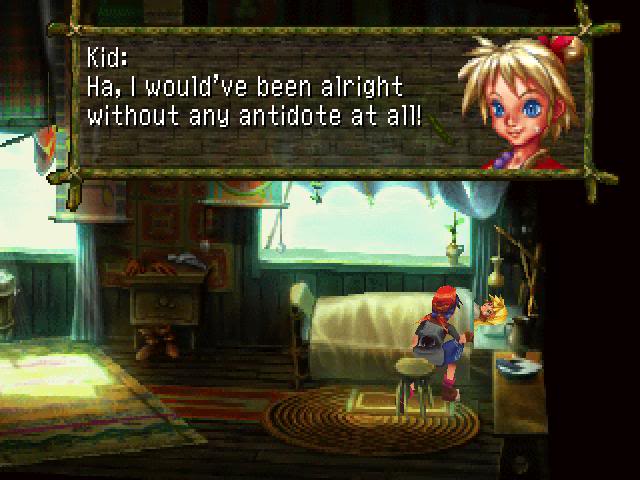
When the key character Kid is poisoned, the player is given the choice to try and find an antidote even though the only known antidote comes from a species of hydra that have been extinct for years, or to write off the scenario as hopeless and continue with the game. The main character Serge is capable of switching between two different continuities of the world, so if the player chooses to hunt for an antidote, they can find it in the other world. If the character does this, however, they destroy the ecosystem of the swamp where they kill the last hydra, and the dwarves that live there are forced to vacate and search for a new home. They select Water Dragon Isle as their new home, and attack the fairies that live there.
It’s easy to see how your actions are linked to the dwarf attack on Water Dragon Isle with this series of choices. However, even if you decide to give up on finding a cure for Kid and don’t kill the hydra, the last hydra will still die and the dwarves will still attack the fairies.
What’s more, Kid survives her poisoning either way.
Some gamers might find the irrelevance of their decision frustrating, but it’s part of what I find so exhilarating about Chrono Cross. There are so many different ways to get through the game, and all of them lead to Serge and his party having different team members, different story segments, and different side quests. And yet, no matter what Serge chooses to do, his decisions do not play god to what happens in either his home world or the other world. He is not the only factor in how the plot proceeds. The story is bigger than him and his decisions. To me, that’s a very human experience, and not one that I think many gamers are used to being confronted with. Fate is the ruler of everything in Chrono Cross, and before Serge can make a decision to change the world, he must defeat Fate.
Whether our decisions are butterfly’s wings that stir up reactions across the galaxy or irrelevant expressions of our own will in an indifferent world guided by fate, they are still ours. Go choose your own adventure.
To begin with, I want to announce that we’ll be deviating from our regularly scheduled two posts per month to only one post per month through the end of the year. This is my last term of graduate school, and the time devoted to my job, my internship, and completing and defending my thesis and portfolio, I simply won’t have the time for two. Thanks for your understanding, dear readers. Now, on to the blog post!
One of my favorite things to eat any time of year is pineapple. August is the end of pineapple season, so we’re going to give it some love, gosh darn it. Of course, one of the best things you can possibly do with a pineapple during pineapple season is just buy a ripe one, cut it up, and eat it… But I’m one of those people who loves pineapple on their pizza, their burgers, and their thai fried rice. A tango dancer taught me this recipe at a milonga (read as “tango dance party”). It’s easy, requires very little effort, and is perfect for potlucks—because part of the reason this requires so little effort is that it’s a slow cooker recipe. All you will need is some pineapple (canned or fresh, up to you!), some barbecue sauce, and a bag of frozen meatballs of your choice.
Mix meatballs and pineapple to your preferred proportions (I do about half and half, so two cans of pineapple chunks to your one small/medium size bag of meatballs will do nicely). Then, douse it all in barbecue sauce. Don’t drown it, though. There’s a difference between dousing and drowning, and the difference is that the barbecue sauce has covered the surface area of all the materials in the slow cooker, but the other ingredients are not submerged in a bath of BBQ. Then, cook it for 4 hours on low, serve, and enjoy the delightful salty sweet of this dish!
This month I’m going to talk about media you have to plan for, just like when you decide to cook with pineapple. Some might say you would have to plan for any recipe, but pineapple is the sort of ingredient that either works or does NOT. You have to plan for it. Just like with choose your own adventure books and games with time limits, both of which we will be talking about today!
Choose your own adventure books were always something of a mystery to me when I was a child. I could never seem to figure out what I was supposed to do, and more often than not I got tricked into ringing a bell forever, accidentally became a cult sacrifice, or got gored by a unicorn. That was not the case with the new Gravity Falls choose your own adventure book, however! Although Dipper and Mabel and the Curse of the Time Pirates' Treasure! offers the reader plenty of terrible ways to die or mess up time forever, the book also allows readers to get back on the right track. The book begins with three paths. Dipper, Mabel, and Blendin can go to the future, the middle ages, or the old west. It’s possible to get a time key in each era, and it’s possible to unlock the final ending once you’ve got the time key. It’s just getting one that can be so gosh darn difficult.
When the children and Blendin arrive in an era, there are choices to be made. There are three things to choose from in the old west and in medieval times, but the future only has two choices—probably due to the mystery hidden within this timeline of events, but more on that later. One might think that only one choice would lead to finding a time key. In a way, that’s correct. Only one series of events within each era will lead to finding a time key. Fortunately for the reader, any of the choices available when entering an era have the potential to lead back to choosing from that menu again.
Say, for instance, you choose to battle the knight in medieval times. Battling the knight might not get you a time key, but the King will let you choose from the other two tasks he originally offered to Dipper, Mabel, and Blendin if the reader successfully wins against the knight. This is true of the three choices offered in the old west and the two offered in the future as well.
The planning aspect of this book comes in trying to find your way to the treasure. So many choices, but which one could be right?! If you’re a Gravity Falls fan, you’ll likely end up trying to make every choice once just so you can read the whole book. It means you need to plan to have an ample supply of bookmarks handy, but it’s a good way to approach the book—because even though you might find the time pirates’ treasure by finding a time key, you won’t find some of the more interesting endings or secrets hidden within the book.
The second piece of media I want to bring up is Final Fantasy: Lightning Returns. It’s one of the only games I ever bought the official guide for, and here’s why: the game is on a time limit. I know what you’re thinking, “A time limit? What are you talking about, this is a JRPG!” So was Majora’s Mask. But unlike Majora’s Mask, Lightning can’t play the Song of Time and return to the beginning of her three day period. Her game is actually set on a six day period (although you can create a seventh day by saving enough souls), and is designed so the player will come back and play the game again and again. But who really has time for replays in this day and age?
There’s a lot to cover in Lightning’s story. Anyone who’s played the first two games of the Final Fantasy XIII series knows there’s a lot of damage control to do, and on top of the major plot stuff there are plenty of sidequests! It’s a lot to work into a single playthrough—which is why the player must manage their time effectively.
The player also has to choose what Lightning is going to wear. You thought picking your outfit on a daily basis was a toughie, just wait until things like your defense, speed, and strength are linked to it! Some truly terrible clothing decisions can be made, and some lovely ones too—but it takes a keen eye, careful planning, and occasionally a credit card and tactical preorder for premade Final Fantasy throwback costume DLC. The player is allowed to have three outfits equipped at a time and can cycle through them in battle. Since Lightning is the only character the player has in their party (most of the time) it’s important that these outfits not only look good, but play a particular role in the wardrobe. Fighting something that’s weak to magic? Better cycle over to Yuna’s outfit from Final Fantasy X-2. Need something cut to tiny pieces? Cloud’s outfit comes with the buster sword.
The nice thing about having the guide for this game is that it allows the player to plan their wardrobe and their time in an effective manner to get the most out of the game the first time through. In a game with a time limit and no Song of Time to help me navigate around within it, I was truly grateful to have a plan going in.
What’s some of the media you’ve had to plan for in order to enjoy? Tell me in the comments!
This really isn’t a recipe, but since my mother was diagnosed with breast cancer this month, I’ve got a link to a bunch of fun summer water infusions and a lot to say about MMORPGs. For those of you that don’t know, MMORPG stands for Massively Multiplayer Online Role Playing Game--MMO for short. What in the world could water and MMOs possibly have in common, you ask?
All of our bodies are made up of sixty percent water. In that respect, we’re all the same. In an MMO, aside from differences that are chosen such as height, weight, class, and a charmingly outlandish haircut, all player characters are also the same. Everyone can run in the game. There’s no disease or physical limitations and you don’t ever have to present as a gender you don’t want to be perceived as. Depending on the game, sometimes it can be difficult to pass for androgynous or ungendered, but we continue to evolve. The important part is that everyone is on the same playing field. Everyone can be a dragon slaying, horse breeding, warrior farmer they want to be.
There have been some pieces of media that have illustrated this strength of MMOs to great effect over the years.
One of my all time favorites is the cult classic, .hack//. .hack// is a series that centers around an MMO called The World and has had many installments, starting with .hack//Sign, the first anime installment. The main character of .hack//Sign is a male presenting character named Tsukasa that gets trapped in the game and can’t log out. Turns out in real life, Tsukasa is actually a girl. This becomes relevant once Tsukasa gets out of the game at the end of the series, because while trapped in the game he falls in love with a girl whose character’s name is Subaru. Subaru is the leader of a prominent guild in The World called The Crimson Knights. In real life, she is a woman with a wheelchair who could never explore the caves, mountains, and forests she can in The World. What’s fantastic about both Tsukasa’s and Subaru’s experience with their characters in The World is that they offer them experiences they can’t have in real life. It’s unclear if Tsukasa chose to play a male character because they have issues with their assigned gender, but the point is that they are able to pass for male within The World. Subaru, on the other hand, gets to walk. When Tsukasa and Subaru finally meet outside The World for the first time, they recognize each other not because of the way they present in the real world, but because of the way they know each other as people from within The World.
The fade to color is a particularly evocative technique here. Only the in-game experiences of The World are portrayed in color throughout the series, while any real world scenes and flashbacks are depicted in the grayscale the video starts in. In this way, .hack//Sign creates a sense of realism within The World, implying that The World is the world that is most real to the main characters in this story. When Tsukasa and Subaru recognize each other as the people they know from the game, their interaction becomes real to them as well.
Because of the level playing field created by the equality of characters in online games, .hack// is able to include a wide and diverse cast of characters. Aside from Subaru and Tsukasa, they also include a trouble making child named Sora. Sora is taken seriously in The World as though he were an adult. This eventually gets him into trouble (spoilers: he ends up in a coma and losing his memory, and then shows back up in .hack//G.U. as the main character Haseo), but he learns from his mistakes and inevitably comes back to The World as a teenager in the .hack//G.U. game series. The other character .hack// has the chance to include that is often left out of most “save the world” stories is a pregnant woman!
.hack//Infection, Mutation, Outbreak, and Quarantine are the first set of .hack// video games that was released in the franchise. One of the first party members Kite (the player’s proxy in-game) acquires is a spell caster named Mistral. In the third game, she informs Kite that she can’t keep fighting against the anomalies in the game with him because she’s going to have a baby. She explains that she’s not just risking her life anymore, and if she was killed by one of the anomalies in game and fell into a coma in real life she might lose her baby. However, in order to protect The World for her child to enjoy free of anomalies and threats of falling comatose, Mistral later returns to the game in time for the final battle. Later, in the manga series .hack//Key of the Twilight, the reader meets Mistral’s child who has inherited Mistral’s old avatar, showing once again that The World is made for everyone.
The other piece of media that showed the strength of the leveling effect of MMOs is Corey Doctorow's graphic novel In Real Life. It’s difficult in western media to find media that depicts MMOs and players of MMOs in a good light. Too often, it’s the anti-social, overweight, white bigoted troll that is made out to be the only fan of MMOs. In Real Life’s main character, Anda, is not only a woman, but a woman with a real body shape. She’s not one of those gamer girls that hangs out in her bra and panties while playing Call of Duty to impress some asshat boyfriend--not that there’s anything wrong with hanging out in your underwear playing video games, but I find it’s often a lot less sexy than the internet makes it out to be. Instead, Anda’s a real woman who decides to get into the online game Coarsegold to join a guild of other female gamers.
With things like GamerGate and convention horror stories, it’s no secret that gaming and nerd culture in general can be a pretty sexist scene. In Real Life calls that out within the first few pages of the book:
This is an interesting phenomenon because while female players often play male characters to avoid sexism, there are male players that play female characters because they find them prettier than the male avatars. This is an example of the privilege male gamers enjoy in MMOs.
While the .hack// franchise doesn’t address the issue of sexism in gaming (I can only assume because the creators hoped such things would be resolved in the future era of gaming they chose to set their story in) In Real Life does a great job of being inclusive towards a female audience right from the get-go. The story then chooses to tackle another true-to-life issue with MMO gaming: gold farming.
Gold farmers are players who play the game solely to amass in-game assets and then sell them to other players for real life money. Most MMOs have rules that outlaw this behavior, and players can have their accounts suspended if they are caught participating in such exchanges. However, it doesn’t stop it from happening, and people who have only just started an MMO can find websites to buy in-game weapons, armor, materials, mounts, houses, and even pre-leveled avatars. Like many real life MMO players, Anda’s mentor in the guild doesn’t think it’s fair, and so combats the unfairness of gold farming by killing gold farmers’ characters for cash in her spare time. Killing other player’s characters is often referred to in MMO communities as “player killing” or “PKing” for short. Anda becomes involved in the gold farmer PKing, but when one of the gold farmers talks to her, Anda becomes conflicted.
Raymond is the name the gold farmer gives Anda. He tells her it’s the name he uses in his English classes. Through a mix of English, Chinese, and surprisingly inaccurate online translation services, Raymond tells Anda his story. He’s a Chinese man who works as a gold farmer--meaning he is paid in the real world by the company he works for to play Coarsegold and create in-game assets that the company then sells for real world money. For him, gold farming is not something he does to make a little extra money on the side like PKing is for her. Instead, it’s how he makes his livelihood.
What’s interesting about this story is that it does so many good things while simultaneously telling some really hard truths. Yes, gaming can be sexist, and yes, our global economy is royally messed up if illegal gold farming is the basis for companies in certain countries. Even more messed up if those companies aren’t offering things like health insurance, like Raymond’s company does to him. What I love about In Real Life, though, is that the game itself is never made out to be bad. Some bad things can happen in it like PKing and gold farming, but good things can too! International connections, crowdsourcing, and anonymously started calls to action like the one that gets the workers at Raymond’s company to strike until they receive health insurance are just some of the examples; and it’s because of all of those things the world of Coarsegold is just as real as the real world in some ways.
The transitions between the real world and the online one really illustrate that as well. At no point do we ever see Anda in the real world “playing” her character. Anda is always shown inhabiting her character in the online world, as if her avatar were her real body and the game her real world.
Now go have your own real life adventure in an MMO.