Showing posts with label Mass Effect. Show all posts

Friday, October 27, 2017

A Galaxy of Squash: Zucchini Bread Muffins and Pie from a Pumpkin!

My garden did two things really well this year: zucchini and a miracle pumpkin that came from the seeds of a store bought pumpkin I made soup out of last year. But what do you do when you have more squash than you know what to do with?

You make zucchini bread muffins and real pumpkin pie straight from a roasted pumpkin, that’s what!

Zucchini Bread Ingredients:
1 ½ cups all-purpose flour
¾ cup sugar
1 teaspoon baking soda
1 teaspoon ground cinnamon
½ teaspoon salt
1 large egg, lightly beaten
½ cup canola or vegetable oil
¼ cup milk
1 tablespoon lemon juice
1 teaspoon vanilla extract
1 cup shredded zucchini
¼ cup miniature semisweet chocolate chips
¼ cup chopped walnuts

First, preheat your oven to 350°F so it’ll be ready to bake your muffins. Then combine the flour, sugar, baking soda, cinnamon, and salt in a bowl. In a separate, larger bowl, beat the egg, oil, milk, lemon juice, and vanilla together. Then stir in the dry ingredients until the entire mixture is moistened. After that, it’s time to fold in the zucchini, chocolate chips, and walnuts. At this point, you’ll want to either grease a muffin tin or throw some muffin cups into your muffin tin. Then fill each muffin mold two-thirds of the way full. DON’T completely fill them or your muffins will be difficult to get out of the tin, and will be monstrously big. Bake for 20-25 minutes or until a toothpick comes out clean. 

These muffins freeze pretty well too, if you want to make a large batch and then save some for the winter. This recipe will give you about a dozen muffins, so plan accordingly. I made tons this summer to keep up with the way my zucchini plant was producing.

Pumpkin Pie Crust Ingredients:
1 ⅓ cups all-purpose flour
½ teaspoon salt
½ cup butter
3 ½ tablespoons cold water

Pumpkin Pie Filling Ingredients:
2 cups mashed, cooked pumpkin
1 (12 fluid ounce) can evaporated milk
2 eggs, beaten
¾ cup packed brown sugar
½ teaspoon ground cinnamon
½ teaspoon ground ginger
½ teaspoon ground nutmeg
½ teaspoon salt

First off, if you don’t want to make pie crust or roast your own pumpkin, store bought is fine. If you are roasting your own pumpkin, make sure to cut it in half, take out the seeds, scrape the sides with a spoon, and roast it at 400 degrees for 20-40 minutes. Placing the cut sides down on a cookie sheet is an effective way to do this. Once you can spear the pumpkin flesh easily with a fork, it’s done. Remove from the oven, and mash. If you end up with more than 2 cups of pumpkin, double your recipe and make two pies!

To make the crust, mix together the flour and salt. Cut your butter into the flour, and then add cold water one tablespoon at a time. You may need only 3 tablespoons, or up to 4 tablespoons, so pay attention to the consistency of your dough when mixing. Mix the dough after each tablespoon of water and repeat until dough is moist enough to hold together. With lightly floured hands, shape the dough into a ball. On a lightly floured cutting board, roll the dough out to about ⅛ inch thickness. With a sharp knife, cut the dough 1 ½ inch larger than the upside-down 8- to 9-inch pie pan. Gently roll the dough around the rolling pin and transfer it right-side up onto the pie pan. From there, unroll it and ease the dough into the bottom of the pie pan.

Once your pumpkin is done roasting, take it out of the oven and let it cool. Then peel off the skin and mash it! If you want a smoother consistency, you can also puree your pumpkin. I just really like getting my hands dirty mashing the pumpkin, and feel the mashed pumpkin consistency of the pie holds together better, but both methods will taste delicious! After you’ve prepared your pumpkin and put it in a large bowl, add your evaporated milk, eggs, brown sugar, cinnamon, ginger, nutmeg, and salt to the bowl and mix. You can do this with a spoon or with an electric mixer or immersion blender. Regardless of your method, be sure to mix the pie filling well. Then pour the filling into your prepared crust and bake for forty minutes or until when a knife is inserted one inch from the edge comes out clean.

Now that we’ve squashed all that squash away into those baked goods, we’re going to talk about a game that was squashed into the shadow of its predecessors—Mass Effect: Andromeda!


Let’s take a moment also to appreciate how well BioWare did on making the cover for Andromeda a whole lot less gendered than their previous covers. It still bothers me that I have to look at male Shepard’s ugly mug every time I pull up a track from one of the Mass Effect trilogy soundtracks. Star reflecting helmet and practical genderless spacesuit/armor, however, I’m all about.

When Andromeda was first released I lovingly referred to it as Andurrmadurr because it was so buggy that it was nearly unplayable. I put it down for a few months and came back after a hefty amount of patching had been done, and loved every minute of it.

What’s unfortunate about Andromeda is that since it follows the monumental Mass Effect trilogy, it had a lot to live up to—and has been catching a lot of hate from disappointed fans of the previous trilogy and fans who wanted a less buggy game in the beginning. My hope today is to convince you that Andromeda deserves a second chance—because it’s chock full of really important, interesting things for the intersectional and feminist gamer.

If you’ve never heard of Mass Effect before, google it or get the run-down on it from my previous blog post that went up earlier this year.

Now that you understand that Mass Effect is a sci-fi title set in space where multiple alien species coexist and collaborate, imagine they decided to take a little jaunt over to the next galaxy. A one-way trip that takes 600 years in a cryo-stasis pod with the hope of establishing a new home. When Ryder wakes up in Andromeda, it’s to the reality that the previous intel on livable planets in the Andromeda galaxy has become a little outdated. One mission later, she’s replacing her father as the human Pathfinder and tasked with finding a way to make a home for herself, humanity, and all the other people who came to Andromeda with the dream of a new life.

We’ll be using female pronouns for the player character in this blog post, as Sara Ryder is the twin I’ve picked both times I’ve played through Andromeda, and she’s the one I know best. Her twin Scott Ryder will also be mentioned, as whichever twin the player doesn’t pick also plays a role in the story. The reason? Andromeda is a family story. While Shepard’s story in the Mass Effect trilogy was more of an epic, Ryder’s story is one of discovery and new life.

The theme of family doesn’t stop with Ryder, however. Many of Ryder’s team mates are also very attached to their families. Drack, the old krogan warrior, is a grandfather. His granddaughter Kesh serves on the Nexus as Superintendent. Vetra, your turian artillery and trade specialist, is a big sister. Peebee is an asari misfit who finds a place on the team. Drack’s granddaughter Kesh, Vetra’s sister Sid, and Peebee’s ex-lover that left her with attachment issues all feature heavily in these team members’ loyalty missions—which really brings out the theme of family and how familial connections define us. In tone, this gives Andromeda a focus on nurture and creation that Mass Effect has never had before.

Drack

Vetra

Peebee

These themes and ideas are furthered by the profile of the new alien species the player encounters in Andromeda—the angara. The angara are a hugely emotional species—but in a very different way than has been previously portrayed. Often, emotion is seen as the opposite of logic and is therefore discounted as worthless. It’s also been coded as “female” in our own culture for a very long time, which has a whole other set of associations that I won’t bother to get into, but you get the idea. It’s a big deal to see emotion highlighted as an intelligent and valuable thing. Plus, the angaran team member to join Ryder—named Jaal, for those of you wondering—is male. This means that we have a male character exhibiting high levels of emotion in healthy ways within the game, which is another great stride for the Mass Effect franchise.


On top of that, we finally have female krogan, salarians, and turians popping up as normal NPCs everywhere in the game—giving the galaxy a more realistic population than the earlier games. Female angara are common as well. As are women in power, from the sleazy human crime lord Sloane Kelly to the powerful and rigid krogan leader Nakmor Morda to the asari and salarian pathfinders. Conversations about diverse family groups, correct pronouns, and same-sex relationships aren’t uncommon either. Andromeda is also the first videogame EVER to feature a sex scene with cunnilingus in it! If that’s not a feminist victory in itself, I don’t know what is—and that scene is part of Jaal’s romance, since I know some of you are wondering. ;)


Although Mass Effect: Andromeda had a rough start—read all about the drama that went down at BioWare here—the game has been patched, and the story and characters were handled with so much love and compassion that you won’t regret squashing Andromeda into your media queue. Especially if you have a side of zucchini bread muffins or pumpkin pie to refuel on between skirmishes.

Friday, January 27, 2017

Latkes: New Year's and Choosing Your Own Adventure

New Year’s is one of my favorite times of year. My junior year of college, the women I lived with and I started getting together to exchange our holiday gifts on New Year’s. We would play Christmas music, and make latkes together. Perhaps you’re Jewish and know exactly what I’m talking about when I say “latkes.” Perhaps you’re a food aficionado and also know what I’m talking about. For those of you who have never heard of a latke in your life, I highly encourage you to find one and eat it immediately! The latke is a Jewish traditional potato pancake. They are a favorite Hanukkah food due to their being fried in oil. As we all know, the miracle celebrated at Hanukkah is oil that should have only lasted one long winter’s night burning for eight!

Now the connection between latkes and miracles is clear, there are many ways to make latkes, and many things they can be topped and eaten with in accordance to the eater’s preferences. Latkes can be made from russet potatoes, assorted vegetables, sweet potatoes, and even cheese. The most common toppings for latkes are nothing (as latkes are very tasty just on their own), sour cream, and applesauce. My friends and I prefer to make our latkes out of a combination of shredded russet potatoes, parsnips, and sweet onion. We like to have both sour cream and applesauce on hand to spread on our latkes. I’ll chronicle our recipe below. I’ll leave it to you to choose your toppings—maybe even try out some new ones of your own. If you’re interested in alternative recipes or more latke trivia, you’ll enjoy directing your attention here to the blog of Tori Avey.

Ingredients:
3 large russet potatoes
1 large parsnip
1 medium sweet or white onion (dealer’s choice)
4 large eggs
4 tablespoons of flour
3 teaspoons of salt
Freshly ground black pepper to taste
Oil for frying (we prefer olive oil)

First, you will need to peel and grate your potatoes and parsnip. You will be frying your potatoes, but if for some reason you don’t wish them to discolor prior to frying, you can put your grated potatoes in water. You can grate the vegetables straight into a bowl of water to do this quickly. Next, you will finely chop your onion. Once the potatoes, parsnip, and onion are prepared, you will need to squeeze as much water from the mixture as you can. You can do this by pressing out the water with cheesecloth or tea towels. The removal of moisture is one of the reasons my friends and I like to add parsnips to our latke mix, as parsnips don’t retain as much water as potatoes and onions. It’s important to get all of the excess moisture out of the vegetables so that they will fry agreeably.

Once you’re satisfied with the dryness of your grated vegetables, crack your eggs into a separate container and beat them lightly. Pour them over your vegetables and mix when done. Then add the flour, salt, and pepper and mix well.

Next, you will prepare your oil. It’s important to get the oil to the right temperature. If the temperature is too low, your latkes will be soggy. If it’s too high, they’ll burn on the outside before they’ve cooked all the way through on the inside. If you’re worried about the temperature of your oil, place an unpopped popcorn kernel in it. When the kernel pops, the oil is ready for frying.

Once your oil is ready, it’s time to form your latke mix into pancakes. My friends and I do this by hand, measuring the amount for each latke with the palms of our hands. Latkes are usually small, perfect for sharing and eating with one’s hands. Although larger latkes can be made, they often break apart in the frying pan. Experiment with the size, and see what works for you. Depending on the size of your pan (and your latkes), you’ll be able to fry varying numbers of latkes at a time. I have yet to encounter a pan large enough to allow me to fry all of my latkes at once, so it’s important to set up a drying area for your latkes. A drying rack with a paper towel works nicely—however, if you have many latkes to fry and want to serve them hot and all at once, my friends and I have found that turning our oven to warm and placing newly completed latkes onto a paper towel covered cookie sheet works rather well. The heat of the oven keeps the latkes crispy without letting them get soggy or cold.

Enjoy your finished latkes with your choice or lack of condiment. Just like in everything Bioware has ever created, the choice is yours.

Which brings us to this month’s media tie in. We’ll be talking about choice in video games. We’ll cover the Mass Effect trilogy (both because of hype for Mass Effect: Andromeda and because I just beat them this last December), The Legend of Zelda: Skyward Sword, and Chrono Cross.

If you’ve ever played any of Bioware’s games, you know why we’re talking about Mass Effect. The Mass Effect trilogy was not a classic RPG where you took on the role of a pre-made character. The player decided everything about their version of Commander Shepard from their first name and backstory to the shape and color of their eyebrows (for those of you interested, I played red-headed fem Shep), and then goes on to decide how Commander Shepard reacts to literally every line of dialogue in the game. What’s truly awe inspiring about the amount of reactions available to Shepard is that they affect more than just how the current decision she’s making turns out. Let’s take one of my favorite characters of the game for example. His name is Wrex Urdnot, and he is a krogan.


Krogan are very battle hardy and naturally long lived, but their race is dying out due to a genetic bioweapon called the genophage that hugely increases the number of stillborn offspring birthed. When Wrex finds out that the antagonist of Mass Effect is trying to cure the genophage so he can mass produce brainwashed krogan soldiers, he has a very emotional and violent reaction to the suggestion that all data on the genophage cure be destroyed. If the player hasn’t completed Wrex’s loyalty quest, Shepard doesn’t have the option to talk Wrex down in her dialogue menu, and she is forced to shoot him.

If Wrex survives, he goes on to unite the krogan under his rule in Mass Effect 2. If he does not, Wrex’s brother Wreav is the one to unite the krogan—and Wreav is not as progressive as his brother. Wrex believes the krogan are warlike because of the genophage. He believes that krogan can live in peace together and with other races. Wreav, on the other hand, believes the krogan are superior to other races and that their warring culture shouldn’t be questioned or changed. The direction the krogan species takes and the willingness of other races to help the krogan cure the genophage is hugely affected by Wrex’s presence and absence.

Other decisions are less plot relevant and more relevant to Shepard’s relationships to other characters. These relationships also carry through all three games, affecting the continuity of Shepard’s social life and her situational and dialogue options with other characters. For example, characters Shepard is mean to are less likely to trust her in high stress situations. Be too mean to the wrong person, and you might not have the option to save them in a moment of tension. Depending on Shepard’s gender and romantic inclinations, the player will also have the opportunity to romance certain characters. These can sometimes surprise the player with their bluntness, or be witty and humorous.


My Shepard romanced Garrus—one of the only characters that is on Shepard’s crew in all three games, and a turian. That is to say, Garrus is an alien. Depending on who Shepard romances, the salarian doctor Mordin Solus has romantic advice about how to have safe sex with her partner. If Shepard is romancing an alien, the advice Mordin gives her can be very interesting and ranges from hallucinations when kissing, anaphylactic shock from ingesting semen, and the possible death of her partner if Shepard doesn’t brush her teeth properly.


If Shepard is romancing no one when she has this conversation with Mordin, he will assume Shepard is interested in him (regardless of Shepard’s gender) and will inform her that he isn’t interested.

Shepard’s romances also play a larger part in the game's continuity and bonus scenes. My Shepard romanced Liara in Mass Effect, but romanced Garrus in Mass Effect 2. In Mass Effect 3, both Garrus and Liara talked to Shepard about their past romantic involvement, trying to see if Shephard still felt something for them romantically or not. I let Liara down, but told Garrus that I still felt the same way about him. Because Garrus and Shepard were lovers, Garrus always had extra dialogue for me after missions. Shepard and Garrus also shared extra scenes during climactic moments of the game.

Of course, even Bioware’s complicated choice system isn’t perfect.


Even if you investigate the other dialogue options available to Shepard in this scene, there’s no way to ask Mordin about the time he killed someone with farm equipment. Bioware’s system offers a complex map for Shepard to choose from, and varying routes for the player to follow to the end of the game.

Other choice systems, such as the one in Skyward Sword, have less of an overarching effect on the events of the game and the storyline of the main character. Link has been the main character of The Legend of Zelda franchise since the series started, and Link has always been mute. Sometimes other characters would repeat a question or comment it was inferred Link said, but Link has never spoken in any of the Legend of Zelda games. That changed in Skyward Sword. Kind of. In certain situations, Link received dialogue options the player can choose from.

This might not sound like an exciting system that does anything new for games, but bear with me. Link has been silent the entire lifetime of the series. That means that players have developed their own ideas about how he speaks. Giving Link dialogue options allowed Nintendo to finally allow Link to “speak” without inhibiting the player’s interpretation of his “voice”—by which I mean both the literal sound of his voice and the figurative voice of his character made up of the words he uses.

My favorite moment in the game to illustrate this is a conversation Link has with the Sheikah warrior Impa. Impa found Zelda after she fell from the town of Skyloft and has been escorting her on her mission. When Link finally catches up to Zelda in his search for her, Impa tells him that Zelda doesn’t need him because he was late.


Later, the antagonist of the game manages to catch up to Impa and Zelda. He attacks them, but Link arrives to help. When Impa acknowledges his presence after he’s deflected an attack that could have killed her, Link is given three different dialogue options:


The option on the left reflects the persona of Link as the selfless hero that always has the right thing to say. The middle option portrays him as the sensible warrior with few words. And the right option? Well, that option is always, always full of sass. With this system, the player can create whatever voice they feel is correct for Link. To compare more of the effects of Link’s dialogue options in Skyward Sword, some specific ones have been pulled here, and the entire script of the game can be found here.

Chrono Cross is worthy of note when it comes to the subject of choice, because although it does things like offer the player a system to develop the main character’s voice however they see fit and also affect the progression of the story with their choices, the game also actively works against the player based on their choices. This is because the antagonist of Chrono Cross is Fate—not the concept, the individual.

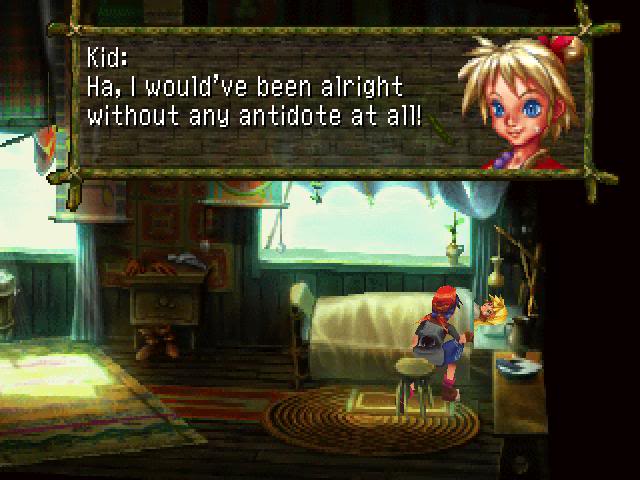
When the key character Kid is poisoned, the player is given the choice to try and find an antidote even though the only known antidote comes from a species of hydra that have been extinct for years, or to write off the scenario as hopeless and continue with the game. The main character Serge is capable of switching between two different continuities of the world, so if the player chooses to hunt for an antidote, they can find it in the other world. If the character does this, however, they destroy the ecosystem of the swamp where they kill the last hydra, and the dwarves that live there are forced to vacate and search for a new home. They select Water Dragon Isle as their new home, and attack the fairies that live there.

It’s easy to see how your actions are linked to the dwarf attack on Water Dragon Isle with this series of choices. However, even if you decide to give up on finding a cure for Kid and don’t kill the hydra, the last hydra will still die and the dwarves will still attack the fairies.


What’s more, Kid survives her poisoning either way.


Some gamers might find the irrelevance of their decision frustrating, but it’s part of what I find so exhilarating about Chrono Cross. There are so many different ways to get through the game, and all of them lead to Serge and his party having different team members, different story segments, and different side quests. And yet, no matter what Serge chooses to do, his decisions do not play god to what happens in either his home world or the other world. He is not the only factor in how the plot proceeds. The story is bigger than him and his decisions. To me, that’s a very human experience, and not one that I think many gamers are used to being confronted with. Fate is the ruler of everything in Chrono Cross, and before Serge can make a decision to change the world, he must defeat Fate.


Whether our decisions are butterfly’s wings that stir up reactions across the galaxy or irrelevant expressions of our own will in an indifferent world guided by fate, they are still ours. Go choose your own adventure.